30 Must-Know Korean Phrases for Your Trip to Korea
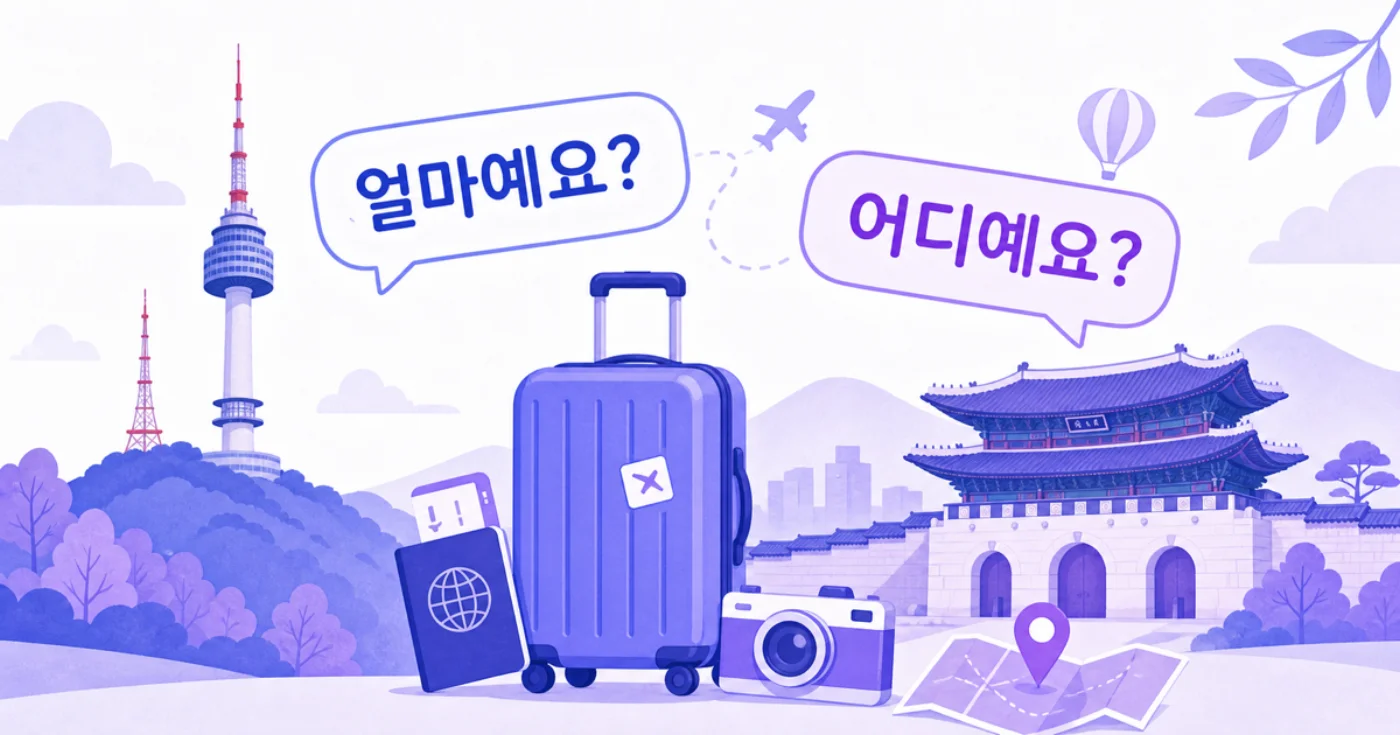
Why Learn Korean Phrases Before Your Trip
Korea has become one of the most popular travel destinations in Asia, and while you can get by with English in major tourist areas like Myeongdong or Gangnam, stepping off the beaten path reveals a different reality. Taxi drivers, convenience store clerks, street food vendors, and bus drivers often speak little to no English. Knowing even a handful of Korean phrases transforms your trip from a series of awkward pointing gestures into genuine human connection. Koreans are famously warm to visitors who make the effort to speak their language -- even a simple "thank you" in Korean earns you bigger smiles and better service.
This guide gives you 30 practical phrases organized by the situations you will actually encounter: getting around, eating, shopping, staying at a hotel, and handling emergencies. Every phrase uses standard polite speech (해요체), which is appropriate for strangers and service situations.
1. The Basics: Your Everyday Foundation
These five phrases are the backbone of every interaction in Korea. Memorize them before anything else. You will use them dozens of times a day.
Bowing is a natural part of Korean greetings. You do not need a deep bow -- a slight nod of the head (about 15 degrees) is perfect for casual interactions with shop staff, waiters, and strangers. Save the deeper bow for formal situations.
2. At the Airport and Hotel
Incheon International Airport is well-equipped with English signage, but once you leave the airport and check into your hotel or guesthouse, Korean becomes much more useful. These phrases cover arrival and accommodation.
Korea has some of the fastest and cheapest public Wi-Fi in the world. Look for "KT Free WiFi" or "Public WiFi Free" networks in airports, subway stations, cafes, and many restaurants. You can also rent a portable Wi-Fi egg (와이파이 에그) at the airport for unlimited data during your trip.
3. At a Restaurant
Eating out in Korea is one of the great joys of traveling there. From street food stalls to barbecue joints, knowing these phrases will help you order confidently and enjoy the full experience. Most restaurants do not bring the bill to your table -- you pay at the counter when leaving.
Tipping is not customary in Korea and can even cause confusion. The price on the menu is the price you pay. Service is included. If you try to leave a tip at a restaurant, the staff may chase you down thinking you forgot your change.
4. Shopping
Whether you are browsing Myeongdong cosmetics shops, haggling at Namdaemun Market, or picking up souvenirs in Insadong, these phrases cover the essentials. Note that bargaining is acceptable at traditional markets but not at regular stores or brand shops.
Korea is one of the most cashless societies in the world. Samsung Pay and credit cards work virtually everywhere, including subway stations, convenience stores, and most street food vendors. That said, keep about 10,000-20,000 won in cash for the occasional small market vendor or vending machine that only accepts coins.
5. Transportation
Korea has an outstanding public transportation system. The subway in Seoul is clean, punctual, and has announcements in Korean, English, Chinese, and Japanese. Buses are cheap but harder to navigate for non-Korean speakers. Taxis are abundant and affordable. These phrases will get you where you need to go.
Get a T-money card (티머니 카드) as soon as you arrive. Available at any convenience store for 2,500 won, it works on all buses, subways, and even taxis across the country. Tap it when you board and when you exit. You get a small discount on each ride compared to paying cash, and transfers between bus and subway within 30 minutes are free.
6. Emergencies
You probably will not need these phrases, but knowing them provides peace of mind. Korea is one of the safest countries in the world for travelers, but accidents and unexpected situations can happen anywhere. Emergency services in Korea are efficient and responsive.
Save these numbers in your phone before your trip: 119 (fire and ambulance), 112 (police), 1330 (Korea Travel Hotline -- English, Japanese, Chinese support 24/7). The 1330 hotline can help with everything from translation assistance to tourist information and reporting lost items.
Bonus: Phrases That Win Hearts
Beyond the essentials, these bonus phrases show cultural awareness and will make Koreans smile. Use them to go from "polite tourist" to "someone who really gets Korean culture."
Quick Reference: Print-Friendly Cheat Sheet
Here are all 30 phrases at a glance. Screenshot this section or write them on a card to carry with you.
- Hello: 안녕하세요 (annyeonghaseyo)
- Thank you: 감사합니다 (gamsahamnida)
- I am sorry: 죄송합니다 (joesonghamnida)
- Excuse me: 실례합니다 (sillyehamnida)
- Yes / No: 네 / 아니요 (ne / aniyo)
- Where is ___?: ___이/가 어디에 있어요? (eodie isseoyo?)
- I would like to check in: 체크인 하고 싶어요 (chekeuIn hago sipeoyo)
- Room key card, please: 방 카드 키 주세요 (bang kadeu ki juseyo)
- What is the Wi-Fi password?: 와이파이 비밀번호가 뭐예요? (waipai bimilbeonhoga mwoyeyo?)
- Can you hold my luggage?: 짐 맡아 주실 수 있어요? (jim mata jusil su isseoyo?)
- Menu, please: 메뉴판 주세요 (menyupan juseyo)
- This one, please: 이거 주세요 (igeo juseyo)
- Water, please: 물 주세요 (mul juseyo)
- The bill, please: 계산해 주세요 (gyesanhae juseyo)
- It is delicious!: 맛있어요! (masisseoyo!)
- How much is this?: 이거 얼마예요? (igeo eolmayeyo?)
- It is too expensive: 너무 비싸요 (neomu bissayo)
- Please give me a discount: 깎아 주세요 (kkakka juseyo)
- Can I pay by card?: 카드 돼요? (kadeu dwaeyo?)
- A bag, please: 봉투 주세요 (bongtu juseyo)
- Where is the bus stop?: 버스 정류장이 어디에 있어요? (beoseu jeongnyujangi eodie isseoyo?)
- Please let me off at ___ station: ___역에서 내려 주세요 (yeogeseo naeryeo juseyo)
- Where is the taxi stand?: 택시 타는 곳이 어디예요? (taeksi taneun gosi eodiyeyo?)
- How long does it take to ___?: ___까지 얼마나 걸려요? (kkaji eolmana geollyeoyo?)
- Do you have a subway map?: 지하철 노선도 있어요? (jihacheol noseondo isseoyo?)
- Help!: 도와주세요! (dowajuseyo!)
- I need to go to the hospital: 병원에 가야 해요 (byeongwone gaya haeyo)
- Please call the police: 경찰을 불러 주세요 (gyeongchareul bulleo juseyo)
- I am lost: 길을 잃었어요 (gireul irheosseoyo)
- I cannot speak Korean: 한국어를 못해요 (hangugeoreul mothaeyo)
Pronunciation Tips for Travelers
Korean pronunciation does not have to be perfect to be understood. Here are a few tips that make the biggest difference for travelers.
- Speak at a steady pace. Rushing through phrases makes you harder to understand. Slow and clear beats fast and mumbled every time.
- Korean has no stress accent like English. Give each syllable roughly equal weight instead of emphasizing one syllable over others.
- The double consonants ㄲ, ㄸ, ㅃ, ㅆ, ㅉ are tensed -- tighten your throat slightly. Think of the difference between "sky" (tense k) and "guy" (relaxed g).
- ㅓ (eo) sounds like the "u" in "bus," not the "o" in "go." This is the most common vowel mistake English speakers make.
- When in doubt, show the Korean text on your phone. Even if your pronunciation is off, reading the Hangul script will make it immediately clear.
Download Naver Map (not Google Maps) before your trip. It is far more accurate for Korean addresses, bus routes, and walking directions. Kakao Map is another excellent Korean alternative. Both have partial English support.
Your Korean Travel Toolkit
You do not need to be fluent to have an incredible trip to Korea. These 30 phrases cover the situations that matter most: greeting people warmly, finding your way around, eating well, shopping smartly, and staying safe. Start by memorizing the five basics -- 안녕하세요, 감사합니다, 죄송합니다, 실례합니다, and 네/아니요 -- and build from there. Every phrase you learn is one less awkward moment and one more genuine connection with the people and culture of Korea.
Start Learning Korean Today
Master Hangul in 7 days with interactive lessons, AI conversation practice, and spaced repetition. 100% free to start.
Get Started FreeRelated Articles
15 Essential Korean Greetings Every Beginner Should Know
Master the 15 most important Korean greetings from formal to casual. Learn when and how to use each greeting with pronunciation guides.
How to Introduce Yourself in Korean: Scripts, Tips & Examples
Learn natural Korean self-introductions for every situation — from casual meetups to formal settings. Includes ready-to-use scripts with pronunciation.
Top 50 Korean Words Every Beginner Must Know
Master the 50 most useful Korean words for daily life. Organized by category with pronunciation guides and example sentences.